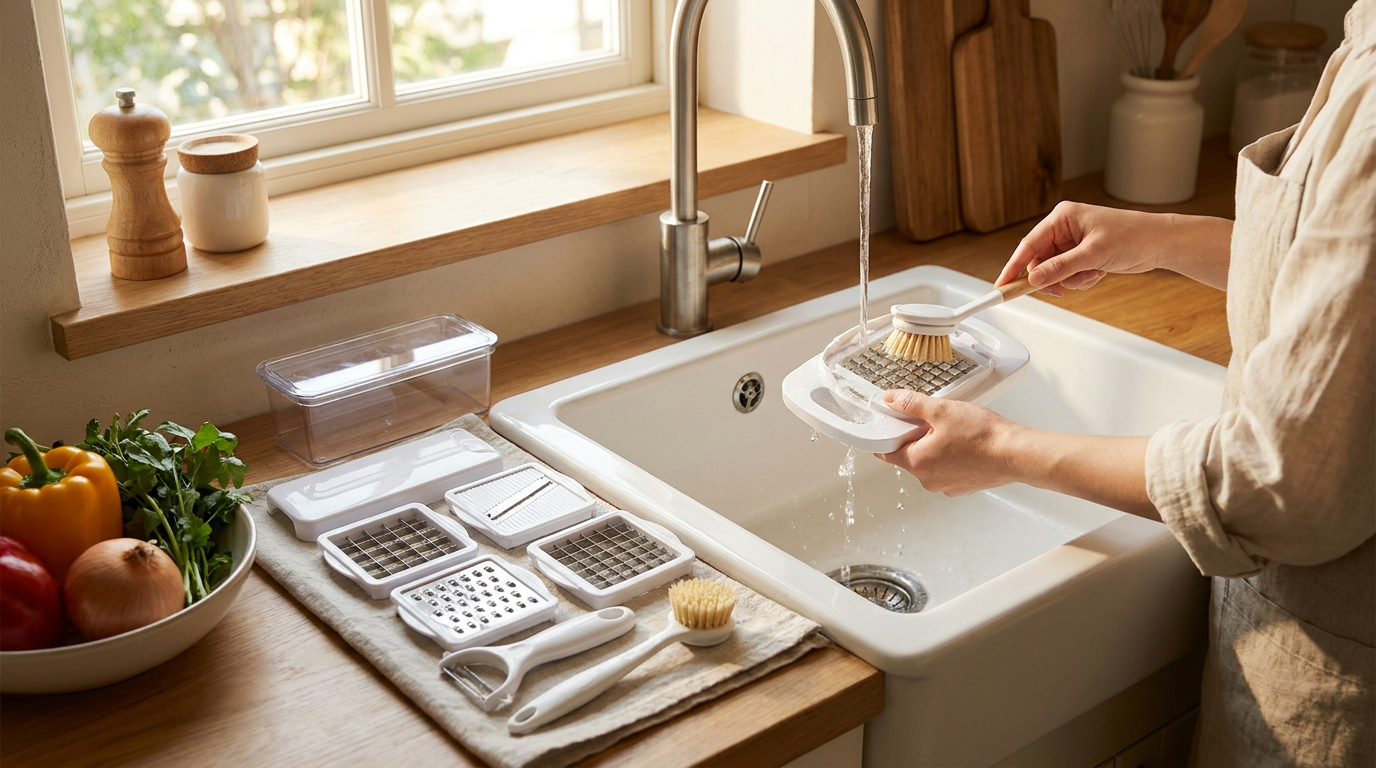
Easy Clean Manual Food Processor Maintenance Guide
 Sam VasquezBuying Guide Lead
The Vegetable Chopper Set of 15 is designed as an easy clean manual food processor that simplifies kitchen prep. Maintaining this tool ensures longevity and keeps your meal prep hygienic. Following a few simple steps for cleaning and care will protect your investment and guarantee it is always ready for action.
The Golden Rule: Clean Immediately After Use
The most critical maintenance step is to rinse components immediately after use. When debris from onions, carrots, or tomatoes dries, sugars and fibers harden onto the stainless steel blades and plastic parts. A quick rinse under running water dislodges most particles before they stick.
This habit is vital for streamlining your meal prep, ensuring your chopper is sanitized and ready for the next task without delays.
Dishwasher vs. Hand-Washing: A Component Guide
While many parts are dishwasher safe, a strategic approach preserves the tool's integrity. As experts at Food & Wine note, different components have specific care requirements.
- Dishwasher Safe (Top Rack Only): The BPA-free plastic catch container, lid, and non-blade attachments are durable enough for the top rack, which prevents warping from intense heat.
- Hand-Wash Recommended: The 420-grade stainless steel blade inserts should always be hand-washed. High heat and harsh detergents can dull the precision edges. Maintaining sharpness is key for this a pro-level kitchen tool.
Storage placement matters for the same reason. The catch container doubles as a storage caddy, and keeping the blade inserts nested inside it does two jobs at once: the edges stay protected from drawer contact that dulls them, and nobody reaches into a utensil drawer and finds a dicing grid by touch. If you do keep blades in a drawer, keep them in a dedicated corner, edge-side down, never loose among other tools.
Safely and Effectively Cleaning the Blades
Cleaning sharp dicing grids doesn't have to be dangerous. The Vegetable Chopper Set of 15 includes a specialized cleaning claw designed to fit between dicing grid teeth, pushing out vegetable bits that brushes can't reach. This eliminates the need to use your fingers.
Hold the blade insert by its plastic frame and use the tool to push debris through. For a detailed walkthrough, see our onion chopper pro dicing tool cleaner guide. Finish with a gentle wash in warm, soapy water.
Pro Tips for Preventing Stains and Odors
- Preventing Stains: For beets or carrots, lightly wipe the plastic container with cooking oil before use. This creates a barrier against pigments.
- Eliminating Odors: To neutralize onion or garlic smells, wash components with a paste of baking soda and water or a diluted white vinegar rinse.
This is also the moment to inspect the blades honestly. A sharp grid pushes through an onion with even pressure; a dulling one starts crushing the near edge before the far edge cuts, and no amount of extra force fixes that — it just stresses the lid mechanism. Grid inserts that have gone dull or show a bent tooth should be retired, because a partially cutting grid is the situation where fingers end up somewhere they shouldn't.
Frequently Asked Questions

Photo by Leo Sacchi on Pexels
Should I sanitize the chopper differently after prepping strong or staining foods?
Beets, turmeric, and chili peppers deserve an immediate wash rather than a sink-side wait — pigment and capsaicin both migrate into plastic the longer they sit, and a chili-seasoned container will happily pass that heat to tomorrow's fruit salad. A hot soapy wash immediately after use handles all three cases; for chilies, wash the handguard and your cutting surface too.
How long should the set last with proper care?
With immediate rinsing, hand-washed blades, and dry storage, the container and attachments comfortably outlast several years of weekly use — the mechanical parts are simple and there is little to fail. The blades set the real timeline: home use with proper care typically gets multiple years before the first grid needs replacing, while running them through hot dishwasher cycles or storing them wet can cut that to a single year. In other words, the maintenance habits on this page are not just hygiene — they are the difference between a purchase and a subscription.
How do I remove stubborn food from the dicing grid?
Use the included cleaning claw to push remnants out from the top. For dried-on food, soak the blade insert in warm, soapy water for 5-10 minutes before using the tool. Never use your fingers.Can I wash all 15 pieces of the chopper set in the dishwasher?
No. The BPA-free container and non-blade attachments are safe for the top rack, but stainless steel blades should be hand-washed to maintain sharpness and prevent heat damage.