Optimizing Meal Prep with the Vegetable Chopper Set of 15
 Priya RamanSenior Analyst
September 21, 2026. This technical overview examines the workflow integration of multifunctional preparation tools within high-volume home kitchens. It is designed for consumers seeking to reduce manual labor while maintaining nutritional variety through consistent vegetable processing.
To master this category, think of it as a matrix of volume and geometry. Efficiency in the kitchen is rarely about the speed of a single cut, but rather the reduction of downtime between different types of preparations. When evaluating the utility of a Vegetable Chopper Set of 15, two axes matter here: the complexity of the cut—ranging from simple dicing to intricate spiralizing—and the container capacity for continuous throughput. Once you see it this way, the transition from raw produce to finished meal components becomes a matter of selecting the correct insert rather than switching between multiple standalone appliances.
The Bottleneck of Manual Food Preparation
The primary friction point in home cooking remains the time-intensive nature of manual dicing and slicing, which often discourages the consumption of diverse produce. According to Fullstar Kitchenware, a high-capacity prep bench that allows users to spiralize, slice, dice, and grate directly onto a pull-out tray ensures that nothing stops between one cut and the next. This continuity is essential for complex recipes that require various textures. Without a unified system, a cook must juggle a traditional mandoline, a handheld spiralizer, and a standard chef's knife, increasing both the physical footprint on the counter and the cleanup time.
Reddit discussions frequently highlight the frustration of "kitchen gadget fatigue," where users find themselves overwhelmed by single-use tools that are difficult to clean. The demand for an easy clean veggie chopper is driven by the desire to minimize the post-cooking labor that often negates the time saved during the prep phase. In particular, the need for a sturdy vegetable spiralizer and slicer that doesn't slip during use is a recurring theme among those preparing low-carb alternatives like zucchini noodles. By consolidating these functions into a single 15-in-1 architecture, the user eliminates the need for separate storage for disparate tools, addressing the physical clutter that often hinders meal prep consistency.
Integration of the Vegetable Chopper Set of 15
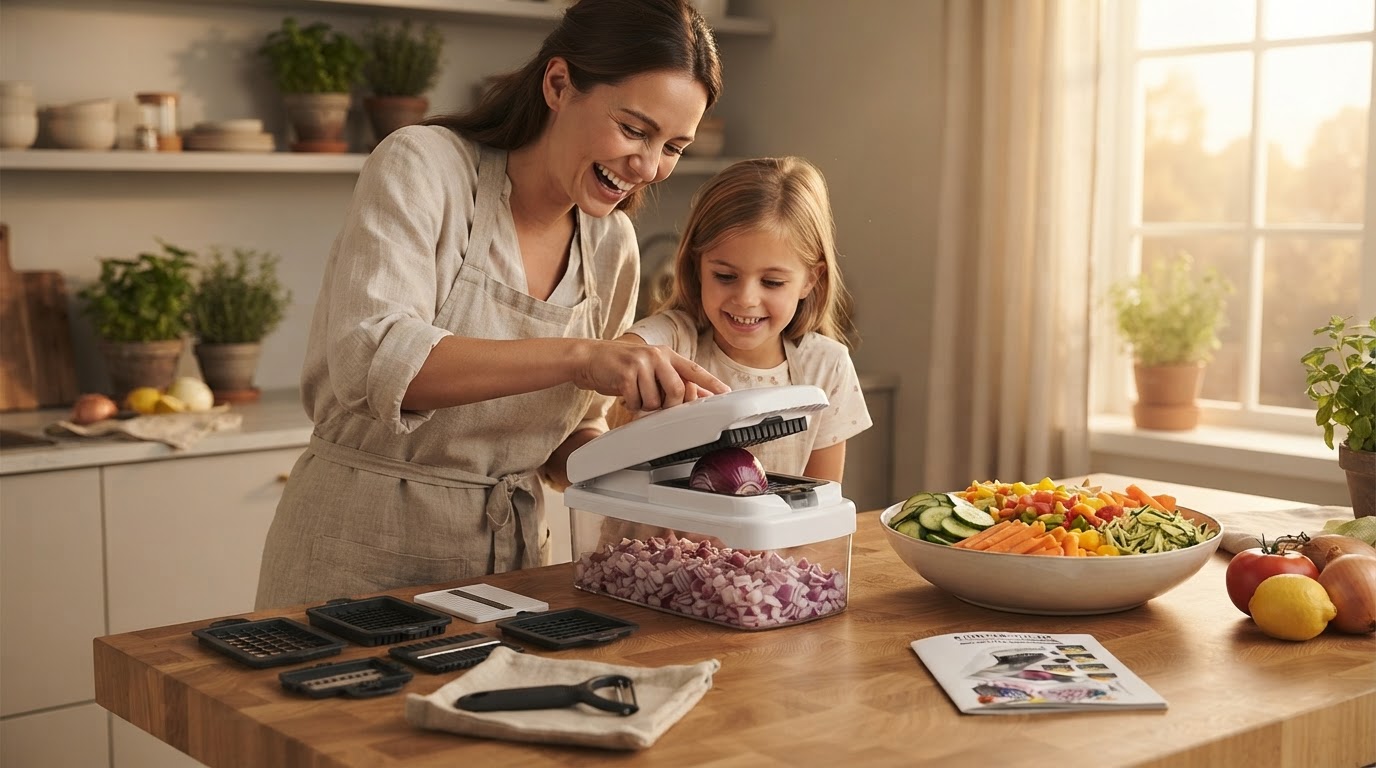
The Vegetable Chopper Set of 15 addresses these logistical hurdles by providing a modular interface for diverse culinary tasks. The system utilizes a specialized base container that serves as the foundation for various blade inserts, including dicing grids, slicing blades, and spiralizing attachments. This modularity is particularly effective when preparing a vegetable spiralizer and chopper workflow, where one might need uniform cubes for a mirepoix followed immediately by long ribbons for a salad. The inclusion of a safety lock and specialized cleaning tools ensures that the high-carbon stainless steel blades remain functional without posing a risk to the user during assembly or maintenance.
For those focusing on specific dietary patterns, such as Paleo or Keto, the spiralizer component is a critical feature. It allows for the rapid production of zoodles or sweet potato ribbons, which can be stored directly in the integrated container. This mirrors the functionality seen in a [salad chopper bowl and dicer](/blog/salad-chopper-bowl-and-dicer), where the goal is to contain all processed food within a single vessel to prevent cross-contamination and mess. The 15-piece configuration typically includes a variety of dicing sizes—small for aromatics like onions and garlic, and large for sturdier vegetables like potatoes or bell peppers. This versatility allows the user to maintain a consistent vegetable spiralizer and chopper output regardless of the ingredient's density. By utilizing a salad chopper bowl and dicer methodology within a larger set, the cook can transition from rough chops to fine garnishes without clearing the workspace, maintaining the momentum of the meal preparation process.
A Decision Framework for Tool Selection
When deploying a Vegetable Chopper Set of 15, the decision rule for which attachment to use depends on the desired surface area and the cooking method intended for the vegetable. High-heat roasting requires larger, uniform cubes to prevent burning, while raw salads benefit from the increased surface area provided by spiralized ribbons or thin slices. To ensure the longevity of the set and the quality of the output, users should follow a structured approach to tool selection and maintenance. This ensures that the vegetable spiralizer and chopper components are used to their full potential without damaging the dicing grids on overly hard produce.
- Assess the density: Use the dicing grid for firm vegetables like onions and carrots, but reserve the slicing blade for softer items like tomatoes.
- Verify blade alignment: Ensure the insert is fully seated in the frame before applying pressure to avoid shearing the plastic guides.
- Utilize the cleaning claw: Immediately remove fibrous residue from the dicing teeth to prevent hardening, which complicates later cleaning.
- Match volume to container: Empty the catch tray once it reaches 75% capacity to maintain enough clearance for the blades to pass through cleanly.
- Prioritize safety: Always use the provided hand guard when using the mandoline or spiralizer attachments to prevent contact with the sharpened edges.
Shop Vegetable Chopper Set of 15 here
Sources
- XL Chopper and Slicer with Pull-Out Tray - Fullstar Kitchenware
- Spiralizer and Chopper Combo Vegetable Slicer - Pinterest
- Fullstar All-in-1 Vegetable Chopper/Slicer/Grater/Spiralizer ...