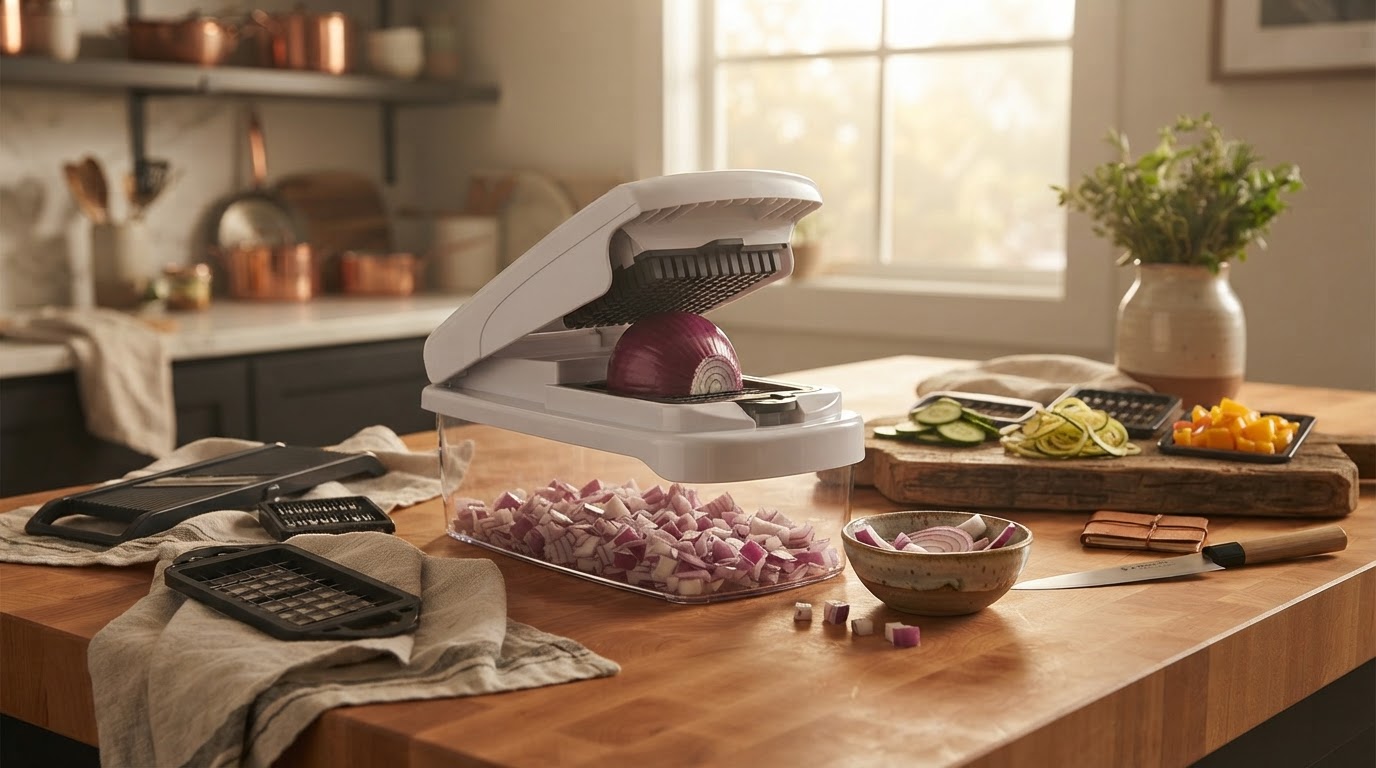
How Enclosed Veggie Choppers Stop Onion Gas in Its Tracks
How Enclosed Veggie Choppers Stop Onion Gas in Its Tracks
Anyone who cooks regularly knows the sensation: seconds after slicing into a fresh onion, your eyes burn, tears form, and vision blurs. While many view this as an unavoidable annoyance, kitchen tool design offers an effective physical solution. To explore more kitchen prep strategies, visit the main guide.
The Chemistry of Syn-Propanethial-S-Oxide
When onion tissue breaks, an enzymatic reaction produces syn-propanethial-S-oxide. This light, volatile gas rapidly dissipates into surrounding air. As it floats upward and makes contact with tear film on your eyes, it breaks down into weak sulfuric acid, causing immediate burning sensations.
The Mechanical Barrier Advantage

Photo by Cihan Yüce on Pexels
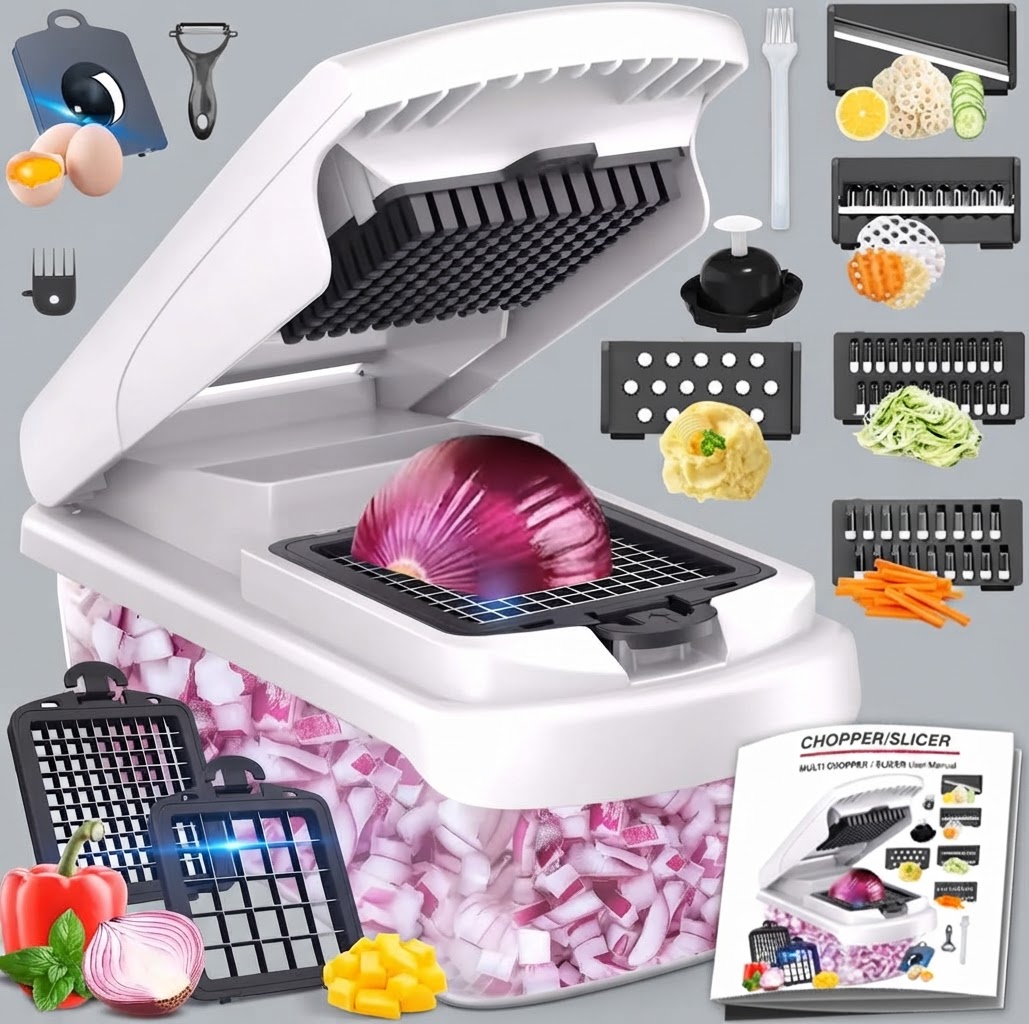
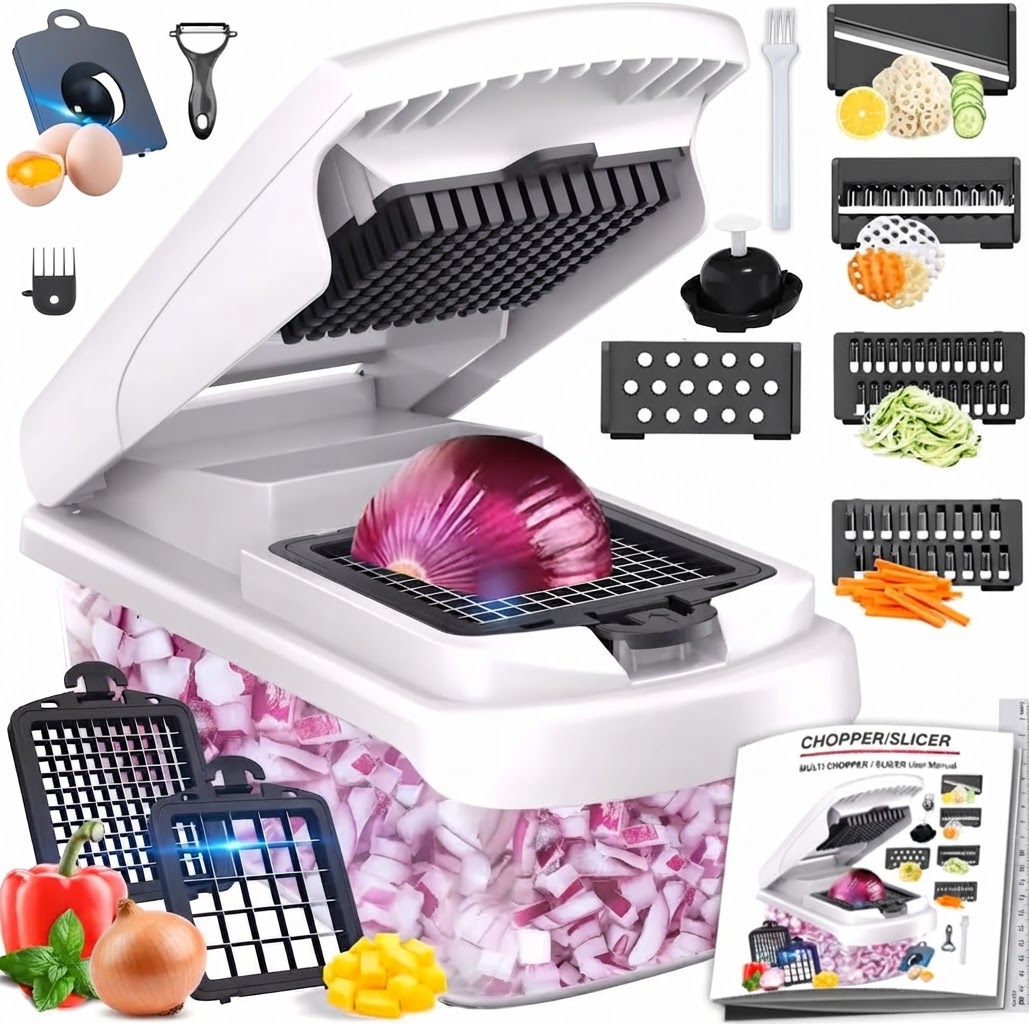
Standard knife prep leaves the open onion exposed on a cutting board, allowing gas to freely evaporate upward toward your face. An enclosed tool like the PRODUCT_TITLE changes this dynamic by creating a physical barrier between the cutting action and your eyes.
When you press down on the handle:
Because air currents cannot carry the gas upward, fumes remain locked inside the tray until you are ready to dump the prepped vegetables directly into your cooking pot.
Blade Precision vs Cell Rupture
Beyond basic enclosure, blade sharpness plays a huge role in gas reduction. Crushing onion tissue squeezes out liquid and releases high enzyme loads. Utilizing FEATURE_2 ensures each pass cuts through tough skin with razor precision rather than tearing tissues.Maximize Prep Efficiency Safely

Photo by Mike Jones on Pexels
Combining tight mechanical enclosure with sturdy FEATURE_4 housing and a secure FEATURE_3 allows home cooks to process large batches of onions safely, cleanly, and completely tear-free.
Read the full guide: How to Chop Onions Without Crying: The Ultimate Kitchen Guide