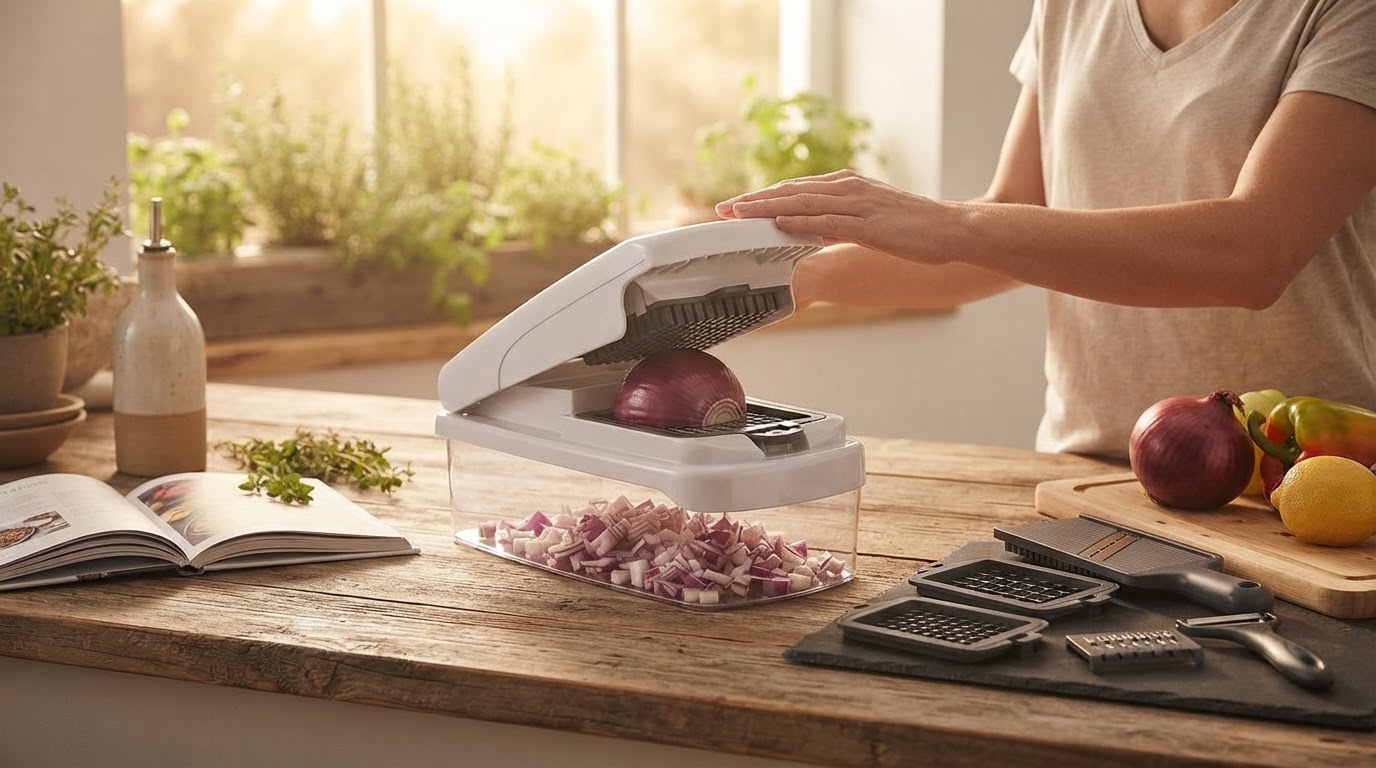
How to Chop Onions Without Crying: The Ultimate Kitchen Guide
How to Chop Onions Without Crying: The Ultimate Kitchen Guide
Chopping onions is a foundational step in countless recipes, yet it remains a frustrating culinary task. If you have ever found yourself weeping over a cutting board while dicing a yellow onion, you are not alone. Eye irritation caused by onions is a universal annoyance, but it does not have to be an inevitable part of cooking.
In this guide, we break down the chemical process causing onion tears, evaluate classic home remedies, and explain how modern enclosed tools solve this problem once and for all.
---
Why Do Onions Make You Cry?
Slicing into an onion ruptures its cellular structure, mixing alliinase enzymes with amino acid sulfoxides. This reaction produces syn-propanethial-S-oxide, a volatile gas.
When this gas reaches your eyes, it interacts with corneal moisture to form a mild sulfuric acid solution. Your lachrymal glands respond by producing tears to flush the irritant. A dull blade crushes more cells, releasing higher concentrations of gas directly into the air.
--- Not every onion attacks with equal force, and choosing the bulb is the zeroth tear-prevention step. Pungency tracks sulfur content: storage yellows and reds sit at the weaponized end of the scale, while the sweet varieties — Vidalia, Walla Walla, Maui — carry meaningfully less of the reactive raw material and produce correspondingly gentler fumes. Freshness cuts the other way than intuition suggests: an older onion that has spent months in storage often runs sharper than a fresh one, and a bulb that has begun sprouting is at its most aggressive. Geography within the onion matters too — the sulfur compounds concentrate toward the root end, which is why recipes that leave the root intact while chopping (a technique with real merit for keeping the onion structurally together) also save the most tear-inducing zone for last. A cook who picks a firm, fresh, sweet-variety onion and works the stem end first has halved the problem before choosing any hack, tool, or technique at all.
Traditional Kitchen Hacks vs. Modern Solutions
Home cooks use various methods to bypass onion tears. Here is how popular hacks compare to specialized tools:
- Chilling the Onion: Refrigerating onions for 30 minutes slows the enzymatic reaction. While helpful, it does not stop gas release entirely during slicing.
- Using Sharp Cutlery: Sharp knives slice cleanly through cell walls rather than crushing them, reducing gas production, though fumes still escape.
- Chewing Gum or Goggles: Chewing gum is largely a myth. Safety goggles block fumes but are clunky and impractical for daily use.
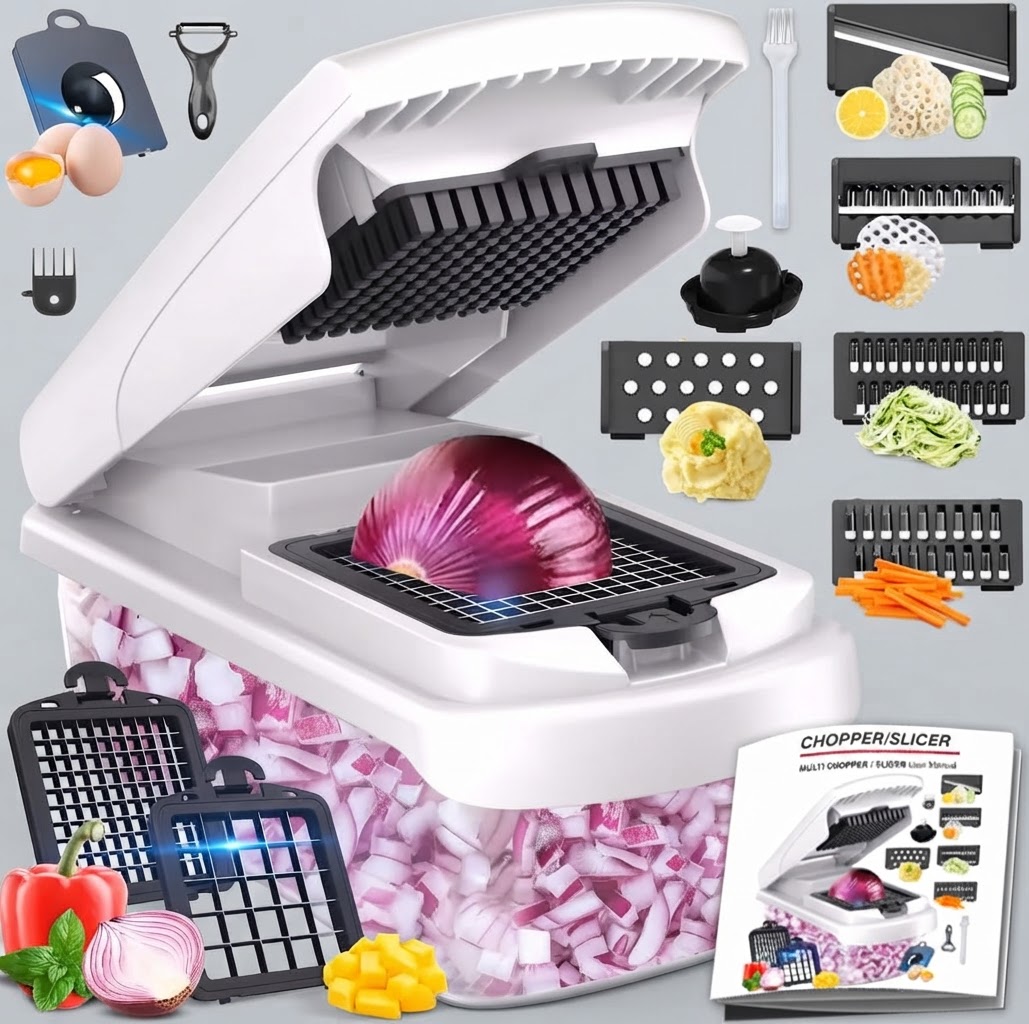
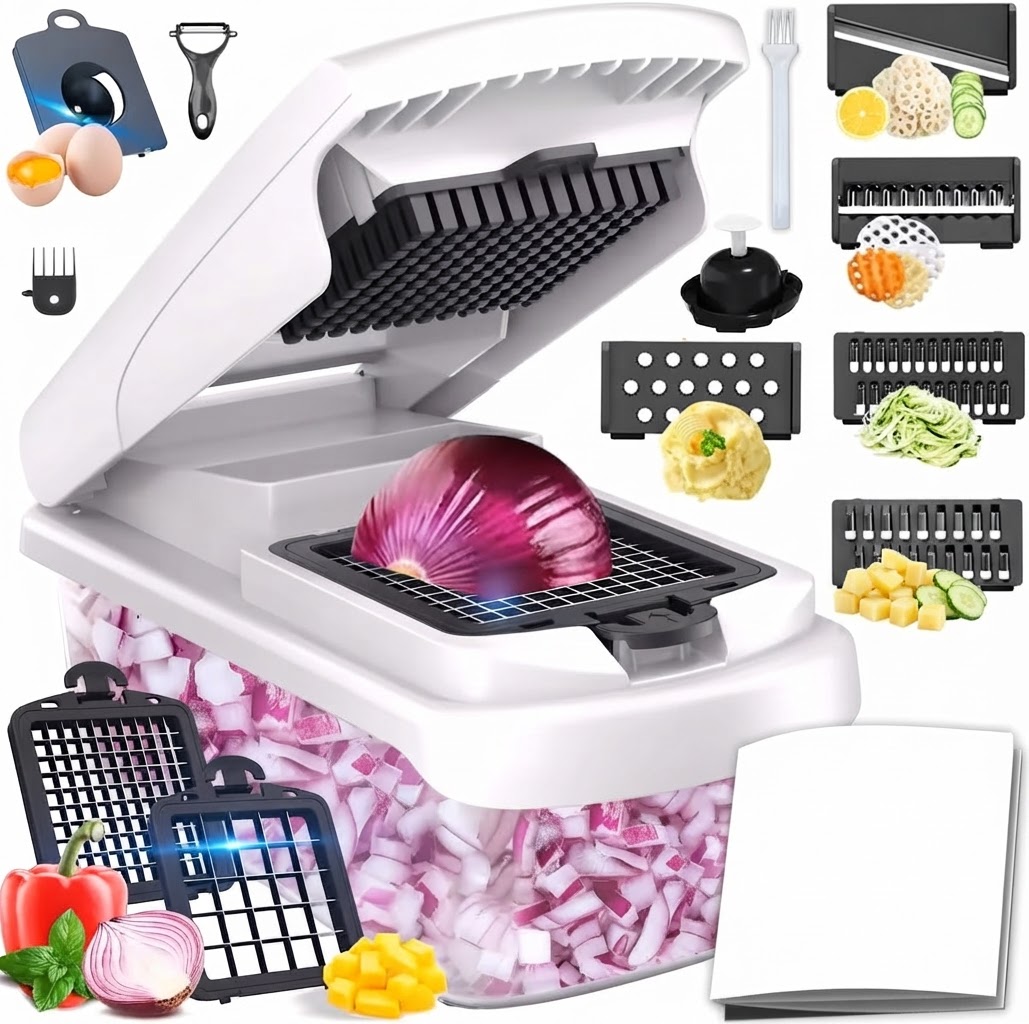
- Enclosed Mechanical Choppers: These tools trap sulfur vapors inside a sealed tray. By containing the gas during processing, your eyes remain protected throughout the prep work.
How Enclosed Choppers Prevent Eye Irritation
Transitioning to a tool like the PRODUCT_TITLE changes your routine. Featuring a FEATURE_1 design, this system allows you to drop onion quarters onto a blade grid and close the lid.
Because slicing happens underneath a lid and falls into a FEATURE_7 with a 6-cup capacity, syn-propanethial-S-oxide gas is trapped inside the vessel. Furthermore, the FEATURE_2 ensure clean cuts without crushing cell walls, reducing gas generation. For large meal prep, containment is the most effective way to eliminate weeping.
---
Essential Safety and Cleaning Tips for Onion Prep
Proper technique keeps your hands protected during prep:
--- The onion's aftermath deserves the same systematic treatment as its fumes. For hands, the stainless-steel trick is the rare kitchen legend that works: rubbing fingers against a steel spoon, sink basin, or dedicated steel "soap" under cold running water binds the sulfur residues that ordinary soap leaves behind, with a lemon-juice rub as the citrus-scented backup. Cutting boards — especially plastic ones, whose knife scars harbor aromatics — release their onion ghost after a scrub with coarse salt and half a lemon, saving tomorrow's fruit salad from today's mirepoix.
Storing the unused half is where a persistent myth needs retiring: a cut onion is not the bacteria magnet chain emails claim, and it does not poison leftovers — food scientists have repeatedly debunked this. It simply needs the same treatment as any cut vegetable: an airtight container in the refrigerator, used within seven to ten days, with the observation that a tightly wrapped onion half will happily perfume butter, milk, and everything else on its shelf if the seal is casual. Diced ahead in a sealed container, onion holds its cooking quality for about a week — which is precisely what makes batch-prepping them worth the single, well-defended chopping session.
Final Thoughts on Tear-Free Cooking
You do not need to suffer through eye irritation. By understanding the chemistry behind onion fumes and switching to trapped-containment methods, you can make kitchen prep seamless, safe, and tear-free.
Related in this cluster
- How to Prep Onions Quickly for Meal Prep
- Mandoline Slicer vs Vegetable Chopper for Onions
- Why the PRODUCT_TITLE Is the Ultimate Tear-Free Solution
- Frequently Asked Questions About Onion Choppers and Tear Prevention
- 5 Best Hacks to Avoid Onion Tears in the Kitchen
- How Enclosed Veggie Choppers Stop Onion Gas in Its Tracks