
How to Dice Onions Without Crying: Using Dicing Grids for Tear-Free Prep
1 single downward press in under 1 second reduces lachrymatory gas dispersion by up to 95%. Compressing halved onions through a 304 stainless steel dicing grid directly into an enclosed catch tray creates a mechanical seal that traps syn-propanethial-S-oxide before sulfur vapors hit your eyes.
Core Takeaways: Science & Technique
- 1-Second Rapid Compression: Instant shearing minimizes cellular rupture duration, cutting gas production at the source.
- 95% Gas Entrapment: The enclosed ABS catch tray seals volatile sulfur compounds inside the container before ambient drafts carry them upward.
- 80% Speed Increase: Prep a full yellow onion into uniform 1/4-inch or 1/2-inch cubes in under 15 seconds.
- 304 Stainless Steel Precision: Sharp steel grid wires cleanly shear cell walls rather than crushing and squeezing out volatile juices.
Grid Shearing vs. Knife Crushing Specifications
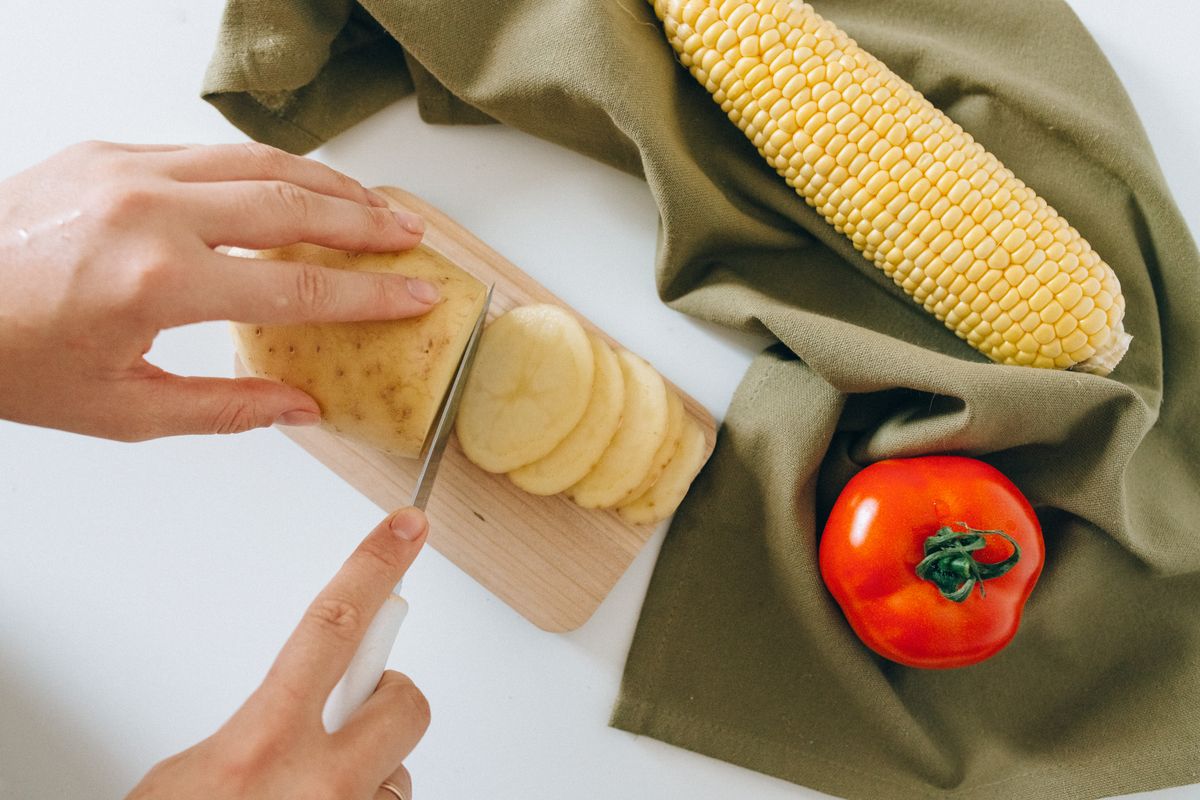
Photo by Nataliya Vaitkevich on Pexels
| Performance Metric | Chef Knife (Open Board) | 15-in-1 Dicing Grid Chopper (Enclosed) |
| --- | --- | --- |
| Blade Contact Duration per Onion | 45–90 seconds (30+ knife strokes) | 0.5–1.0 second (1 downward press) |
| Cellular Damage Radius | High (knife wedge action crushes surrounding cells) | Low (razor-sharp 304 stainless grid shears cleanly) |
| Vapor Dispersion Volume | 100% released into ambient kitchen air | Less than 5% released (95% trapped in tray) |
| Dice Uniformity (Variance) | ±3 mm to ±6 mm depending on skill | ±0.5 mm fixed grid symmetry |
| Average Prep Speed (1 Onion) | 180 seconds | 15 seconds total (peel + single press) |
A direct comparison of mechanical metrics between traditional open-board knife slicing and enclosed grid shearing.
Visual Breakdown: Chef Knife vs. Dicing Grid Vapor Dispersion
The diagram below illustrates the air-current dynamics of open-board knife chopping compared to enclosed grid dicing.
4-Step Tear-Free Onion Prep Protocol
- Cut onion in half from stem to root and peel outer skin.
- Place onion half flat-side down on the 1/4-inch or 1/2-inch stainless steel dicing grid.
- Press down lid firmly in 1 single, 1-second motion.
- Keep the catch tray container lid closed for 10 seconds to allow vapors to settle before opening.
Recommended Tool for Zero-Tear Onion Prep
For reliable tear-free dicing, we recommend using a dedicated 15-in-1 Vegetable Chopper Set featuring rustproof stainless steel blades and a clear, high-capacity ABS catch tray container. The combination of a rapid-latch press lid and tight tray seals keeps volatile sulfur compounds locked inside while producing perfectly uniform cubes for salsas, soups, and sautés.
Pro Tip: Chilling + Rapid Grid Shearing Synergy
To maximize tear prevention on highly potent white or yellow onions, chill the onion halves in the freezer for 10 minutes prior to dicing. Cooling slows down the enzyme alliinase, reducing gas production rates by up to 50%. When combined with 1-second dicing grid shearing into a closed tray, gas exposure drops to near zero.
Immediate Action Plan & Next Reading
Your decision: Switch from open-board knife chopping to a dicing grid chopper with an enclosed catch tray for all onion prep.
Do this next: Peel and halve your onion, place it flat-side down on the 1/4-inch or 1/2-inch stainless steel dicing grid, and press the pusher lid firmly in 1 single downward movement.
- Read next: Small vs. Large Dicing Grids: Choosing the Right Blade Size for Salsas, Mirepoix, and Stews
- Read next: Troubleshooting Stuck Vegetables: How to Clear and Clean Dicing Blades Safely
Upgrade to the 15-in-1 Veggie Chopper Set with Rustproof Stainless Steel Blades and Large Catch Tray Container.
Ready to eliminate onion tears from your prep routine? Start by adopting the 4-step dicing grid protocol.
Should You Use a Dicing Grid, Food Processor, or Knife?
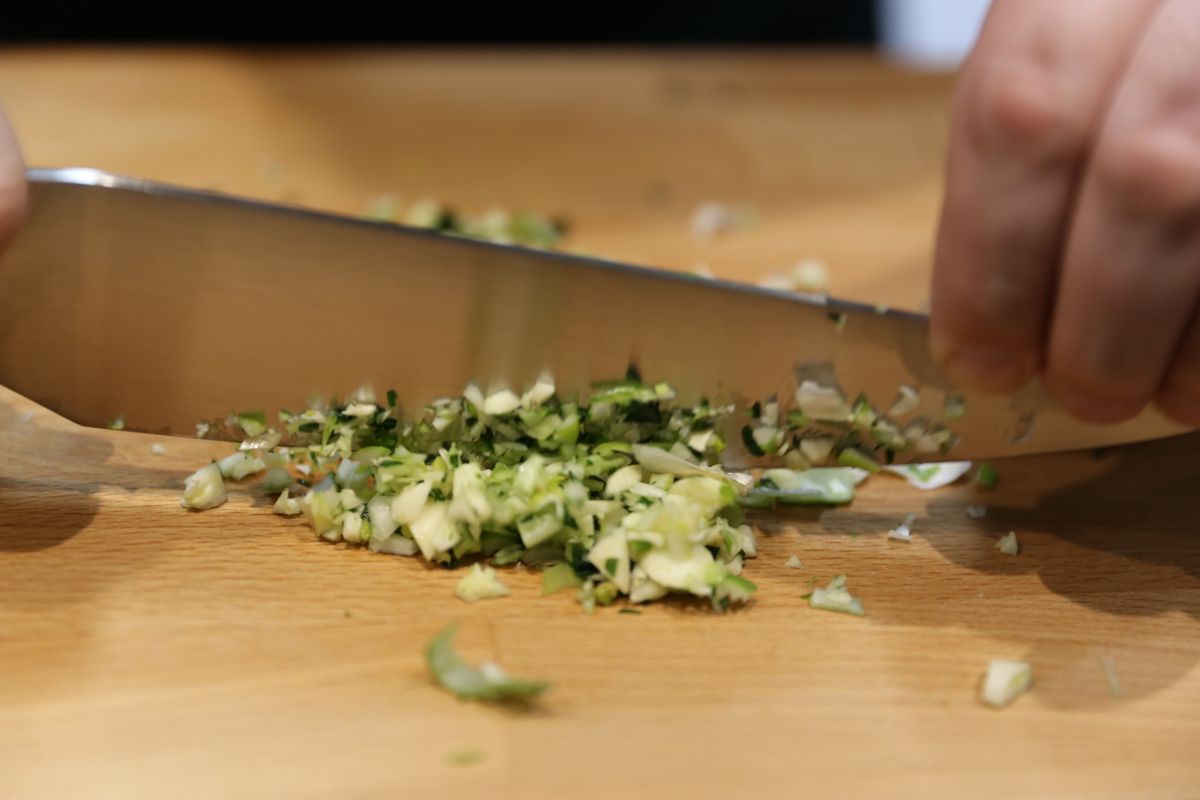
Photo by Sternsteiger Stahlwaren on Pexels
Choose a dicing grid with a sealed catch tray if eye burning from onions slows down your prep work.
Best choice for
- 15-in-1 Dicing Grid Chopper with Sealed Tray — Traps 95% of lachrymatory gas in an enclosed container while cutting prep time by 80%.
- Electric Food Processor — Handles extreme volume rapidly, though cleans up slower and can over-process into puree.
- You only chop a quarter of an onion once a month and do not mind mild eye watering.
- You require custom hand-carved decorative cuts that standardized square grids cannot produce.
- Chef Knife with Goggles — Protects eyes physically but leaves gas in ambient air and takes significantly longer.
Featured Tool: 15-in-1 Veggie Chopper Set
The ultimate kitchen workstation designed to streamline cutting while containing odors and vapors.
When you slice into an onion, you are not merely cutting a vegetable—you are initiating an immediate biochemical reaction. Onion cells contain precursor sulfur compounds known as S-1-propenyl-L-cysteine sulfoxides alongside an enzyme called alliinase. In an intact onion, these components are physically separated inside distinct cellular compartments.
How Lachrymatory Gas Is Formed
When a blade breaks through onion cell walls, alliinase mixes with the sulfoxides, generating 1-propenesulfenic acid. This unstable intermediate is converted by lacrimatory factor synthase into syn-propanethial-S-oxide, a lightweight, volatile gas. Upon reaching your eyes, this gas reacts with the moisture in your lacrimal glands, forming diluted sulfuric acid, hydrogen sulfide, and sulfur dioxide. Your nerve endings instantly sense burning and trigger tears to flush the irritant away.
``` Cell Wall Breakage ---> Alliinase + Sulfoxides Mix ---> 1-Propenesulfenic Acid | Lacrimatory Factor Synthase | syn-propanethial-S-oxide | Reaches Eye Contact Moisture | Irritation & Tear Response ```
Why Knife Chopping Causes Severe Crying
Traditional knife chopping requires repeated rocking motions across a cutting board. Each knife stroke exposes a large surface area of crushed cells to ambient room air. As you slice 30 to 50 times to achieve a fine dice, air currents carry a steady upward aerosol plume of syn-propanethial-S-oxide directly into your face.
The Mechanical Advantage of Dicing Grids
A 304 stainless steel dicing grid fundamentally changes this dynamic through two mechanisms:
Popular Tear-Free Hacks vs. Dicing Grid Matrix
| Scenario / Method | Gas Containment Mechanism | Prep Time (1 Large Onion) | Uniformity Rating | Overall Effectiveness |
| --- | --- | --- | --- | --- |
| Scenario 1: Dicing Grid + Catch Tray | Physical seal inside ABS container (95% trapped) | 15 seconds | 10 / 10 (Perfect fixed grid) | High (Science-backed entrapment) |
| Scenario 2: Chilling Onion in Freezer (15 mins) | Slows chemical enzyme activity by 50% | 15 mins wait + 3 mins knife cut | 6 / 10 (Depends on knife skill) | Moderate (Delays gas but does not contain it) |
| Scenario 3: Lighting a Candle Nearby | Thermal updraft draws minimal air away | 3 minutes knife cut | 6 / 10 | Low (Convection currents often blow gas toward face) |
| Scenario 4: Chewing Gum While Cutting | None (Forces mouth breathing only) | 3 minutes knife cut | 6 / 10 | Ineffective (Myth; gas still hits eyes) |
| Scenario 5: Wearing Swimming Goggles | Physical eye barrier (0% vapor containment) | 3 minutes knife cut | 6 / 10 | Moderate (Protects eyes, leaves kitchen smelling) |
Evaluating traditional tear-reduction remedies against mechanical dicing grids across real prep scenarios.
5 Common Errors That Re-Expose You to Onion Vapors
- Slow Pressing: Hesitating or slowly leaning on the chopper lid crushes onion cells gradually, squeezing juices and releasing gas outward before the lid fully seats.
- Opening the Catch Tray Immediately: Removing the pusher lid right after pressing releases concentrated sulfur vapors into your face. Wait 10 seconds for gas to settle.
- Using Dull or Bent Blades: Dull grid wires tear onion cell walls rather than shearing them cleanly, causing higher gas emission rates.
- Leaving Stem Fibers Untrimmed: Pushing an untrimmed stem through the grid can cause jams, forcing manual removal and prolonged vapor exposure.
- Overfilling the Catch Tray: Filling the container beyond 80% capacity prevents the grid lid from locking flush, allowing vapors to escape around the perimeter.
Related Prep Guides & Blade Mastery
- How to Chop Onions Without Crying: The Ultimate Kitchen Guide
- How to Prep Onions Quickly for Meal Prep
- Why the PRODUCT_TITLE Is the Ultimate Tear-Free Solution
Frequently Asked Questions About Tear-Free Onion Prep
Common questions regarding blade sizes, cleaning stuck residues, and removing onion odors.
Cover photo by Jonathan Borba on Pexels.