Mandoline Hand Guard vs Cut Resistant Gloves: Ultimate Safety Guide
Should you rely on a plastic mandoline hand guard or an ANSI Level 5 cut-resistant glove to prevent severe finger injuries while slicing vegetables?
Plastic mandoline hand guards provide superior absolute protection by creating a solid physical barrier that keeps your fingers completely away from razor-sharp steel. However, they struggle with small or irregular produce like radishes and garlic. ANSI Level 5 cut-resistant gloves offer unmatched tactile control for small items, but carry a risk of fabric snagging on julienne teeth. For ultimate safety, wear an ANSI Level 5 cut-resistant glove while operating a physical hand guard, or switch to an enclosed catch-container chopper like the Vegetable Chopper Set of 15.
Prep Scenario Comparison: Hand Guard vs. Cut-Resistant Gloves
| Prep Scenario | Plastic Hand Guard | Cut-Resistant Glove (ANSI L5) | Primary Failure Mode | Winner / Safe Choice |
| --- | --- | --- | --- | --- |
| Slicing Small Items (Garlic, Radishes, Shallots) | Poor: Prongs fail to bite small produce; item slips away. | Excellent: Allows full fingertip dexterity right up to blade. | Guard prongs dislodge produce, exposing fingers to bare blade. | Cut-Resistant Glove |
| Bulk Slicing Large Roots (Potatoes, Sweet Potatoes) | Excellent: Deep prongs hold firm, maintaining 1.5-inch distance. | Moderate: Requires high grip force; slippery starch reduces control. | User bypasses guard when vegetable gets down to thin end. | Plastic Hand Guard |
| Julienne Slicing (Carrots, Zucchini Matchsticks) | Good: Holds produce parallel to vertical julienne teeth. | Risk: Fabric fibers can catch on sharp julienne teeth and pull finger. | Glove micro-fibers snag on raised julienne blades. | Plastic Hand Guard |
| Processing Terminal Nubs (Last 1/2 Inch of Vegetable) | Poor: Leaves 1/4 to 1/2 inch un-sliced nub waste. | High: Allows paper-thin slicing right to the tip safely. | Forcing remaining nub with bare palm over exposed blade. | Cut-Resistant Glove |
| Enclosed Container Chopping (Dicing & Grating) | Integrated: Pusher lid locks fingers completely outside chamber. | Not Needed: Hands never enter slicing plane during operation. | Lifting lid while pressing blades with unprotected fingers. | Integrated Container Chopper |
Compare safety performance, mechanical clearance, and failure risks across standard kitchen prep scenarios.
Safety & Usability Breakdown: Pros and Cons
Photo by Anna Shvets on Pexels
Pros
- Hand Guard: Creates absolute 1.5-inch mechanical physical separation between fingertips and blade.
- Hand Guard: Shield plate deflects accidental downward slips or off-axis pressure.
- Cut-Resistant Glove: Restores natural tactile feedback and fingertip dexterity for intricate slicing.
- Cut-Resistant Glove: Eliminates produce waste by allowing zero-distance terminal nub slicing.
- Container Systems: Fully encloses blades inside a locked catch tray for 100% finger isolation.
- Hand Guard: Stainless steel prongs often fail to penetrate dense vegetables like rutabaga or butternut squash.
- Hand Guard: Leaves a thick un-sliced end piece (nub) that home cooks are tempted to finish bare-handed.
- Cut-Resistant Glove: HPPE fibers offer cut protection but zero impact or puncture protection against pointed tips.
- Cut-Resistant Glove: Can snag on micro-serrated or vertical julienne teeth, causing dangerous hand pulls.
- Cut-Resistant Glove: Absorbs raw vegetable juices, requiring strict washing protocols to prevent bacteria build-up.
Expert Kitchen Safety Tip: The Dual-Protection Protocol
Professional culinary educators always emphasize that safety gear works best in layers. The single safest way to operate a traditional open-runway mandoline slicer is the Dual-Protection Protocol: put an ANSI Level 5 cut-resistant glove on your non-dominant food-holding hand, then use that gloved hand to grip and push the plastic safety guard.
This hybrid approach provides two distinct lines of defense: the plastic guard provides primary mechanical clearance and stability, while the cut-resistant glove acts as an instant safety net if the produce slips off the guard spikes. If you prefer to eliminate open blade exposure entirely, transition to a closed-container system like a 15-in-1 veggie chopper where blades are secured inside a catch basin during operation.
Critical Failure Modes & Common Safety Mistakes
Understanding how safety gear fails in real-world kitchens is essential for preventing emergency room visits.
Mandoline Protection Decision Flowchart
- Are you processing small/irregular items (garlic, radishes, cherry tomatoes) or large uniform produce (potatoes, onions)? → Yes: Small / Irregular Items -> Use ANSI Level 5 Cut-Resistant Glove (or small-grid container dicer).. No: Large Uniform Produce -> Proceed to next question.
- Are you using vertical julienne teeth or a micro-serrated blade attachment? → Yes: Julienne / Serrated Blade -> Use Plastic Hand Guard only (prevents fabric snagging on vertical teeth).. No: Flat Straight / V-Blade -> Proceed to next question.
- Do you demand zero produce waste with high slicing speed? → Yes: Zero-Waste Priority -> Adopt Dual-Protection (wear ANSI Level 5 Glove while holding Plastic Hand Guard).. No: Maximum Safety Priority -> Use an enclosed 15-in-1 Container Chopper with safety locking lid.
Your Action Plan for Safe Mandoline Slicing
Your decision: Identify whether your meal prep involves high-speed uniform slicing of large roots or fine dicing of delicate produce.
Do this next: For traditional open mandolines, equip your kitchen with ANSI Level 5 cut-resistant gloves and always pair them with the plastic hand guard. For hassle-free batch prep without open blade exposure, upgrade to a catch-container vegetable cutter.
- Read next: How to Use a Mandoline Hand Guard Safely
- Read next: Troubleshooting Mandoline Safety & Slippage
Upgrade to the Vegetable Chopper Set of 15 for complete container safety, razor-sharp rustproof stainless steel blades, non-slip base, and included safety guard.
Follow these simple steps to ensure complete finger protection before starting your next meal prep session.
Key Takeaways: Safety Standards & Dexterity
- Plastic hand guards offer physical distance deflection but struggle to grip hard or small vegetables.
- Cut-resistant gloves require ANSI Level A4 or A5 (Level 5) ratings to withstand razor mandoline edges.
- Never wear cut-resistant fabric gloves when operating vertical julienne attachment blades due to snag risks.
- The Dual-Protection Protocol (wearing an ANSI Level 5 glove while operating the hand guard) offers maximum safety on open mandolines.
- Enclosed container vegetable choppers eliminate open blade exposure altogether by keeping food secured inside a catch basin.
Which Finger Protection Is Right for Your Kitchen Setup?
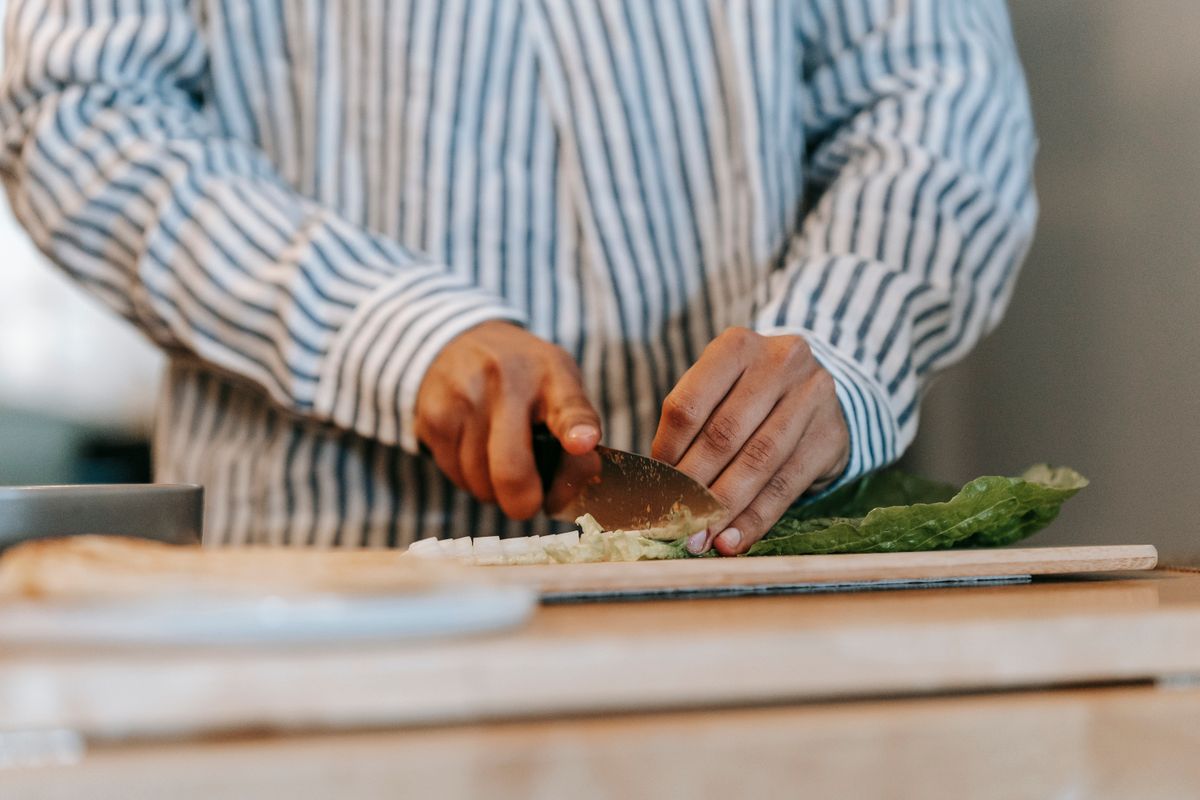
Photo by Michael Burrows on Pexels
Choose plastic hand guards for large straight-blade vegetable slicing, ANSI Level 5 gloves for intricate small produce control, or enclosed container choppers for complete hands-free blade protection.
Best choice for
- Enclosed 15-in-1 Container Chopper — Keeps hands completely isolated from slicing surfaces with pusher lids and integrated collection trays.
- Plastic Hand Guard + Non-Slip Base — Provides rigid mechanical clearance over long continuous slicing passes.
- ANSI Level 5 Cut-Resistant Glove — Delivers full tactile control without plastic prongs slipping off small surfaces.
- Do not rely solely on plastic hand guards when working with extremely small produce ends.
- Do not use cut-resistant gloves with light ANSI Level 1-3 ratings for ultra-sharp mandoline blades.
- Do not use fabric cut gloves on julienne blades where teeth can snag woven threads.
- Vegetable Chopper Set of 15 — Offers 15 functions including dicing, grating, slicing, and julienne inside a self-contained BPA-free ABS catch basin.
Recommended Safe Slicing Gear & Multi-Choppers
Top-rated kitchen safety tools engineered for precision, stability, and hands-free vegetable prep.
Produce Scenarios: Slicing Radishes, Potatoes, and Carrots Safely
Walk through real-world examples comparing guard efficiency across different vegetable shapes.
The Physics of Slicing Safety: ANSI Cut Levels Explained
Provide deep technical breakdown of HPPE/steel mesh fibers versus ABS plastic physical displacement.
Related Kitchen Safety Guides
- Mandoline Finger Guard Slipping? How to Stop Produce Slippage
- How to Use a Mandoline Hand Guard Properly: Step-by-Step Finger Protection
- Safest Vegetable Chopper with Hand Guard: What to Look For Before You Buy
Frequently Asked Questions
Answer specific user questions regarding cut levels, washing gloves, and vegetable waste.
Cover photo by Anna Shvets on Pexels.