Hand Guards vs. Blade Locks: Comparing Key Vegetable Chopper Safety Mechanisms
Should you prioritize a spiked hand guard or a mechanical blade lock when choosing a vegetable chopper?
You need both. A spiked hand guard provides active protection, holding food securely and keeping your fingertips far from exposed mandoline blades during fast slicing motions. Conversely, a mechanical blade lock delivers passive static protection, locking sharp stainless steel insert grids firmly into the frame so they cannot dislodge or flex during high-pressure dicing, routine cleaning, or drawer storage. For total injury prevention across every stage of meal prep, select a multi-functional system—such as a 15-in-1 vegetable chopper—that integrates both physical safeguards seamlessly.
Hand Guards vs. Blade Locks: Phase-of-Use Protection Map
| Meal Prep Scenario | Primary Injury Risk / Failure Mode | Hand Guard Function | Blade Lock Function | Optimal Dual-Safety Setup |
| --- | --- | --- | --- | --- |
| Mandoline Slicing (Cucumbers, Zucchini, Radishes) | Fingertip slippage into exposed angled slicing blade at end of stroke. | Active physical shield; stainless steel prongs hold produce while wide lip shields fingers. | Passive frame stabilization; keeps the mandoline insert plate flush without flex. | Spiked food holder engaged + mandoline insert frame clicked into main catch container lock. |
| High-Pressure Dicing (Onions, Potatoes, Carrots) | Blade grid popping out upward under heavy force, exposing razor edges to palm pressure. | Minimal direct role during vertical push down. | Locks grid frame directly into ABS housing to absorb downward impact without displacement. | Blade lock verified shut + hands positioned exclusively on top lid push pad. |
| Blade Changing & Assembly | Slipping while pushing sharp grid insert into holder with bare thumbs. | No direct protection during blade swap. | Mechanical latch holds insert frame tightly without requiring high finger pressure near steel edges. | Grip insert exclusively by outer plastic frame + snap into mechanical frame lock. |
| Hand-Washing & Grid De-clogging | Lacerations from pushing fingers into dense square blade grids to dislodge food. | No direct protection during washing. | Stabilizes insert frame on flat surface while specialized brush clears grid. | Lock insert onto flat washing mat + use included tooth scraper brush. |
| Drawer Storage & Handling | Accidental cut when reaching into a crowded utensil drawer with loose exposed blades. | Covers mandoline deck surface when parked. | Prevents inserts from rattling free or separating from dedicated storage organizer. | All inserts locked inside catch container or dedicated ABS storage caddy. |
Safety needs shift as you transition from active slicing to swapping inserts and hand-washing. The matrix below outlines failure modes and safety performance across common prep scenarios using scenario-based evaluation rows.
Trade-Off Analysis: Active Protection vs. Static Security
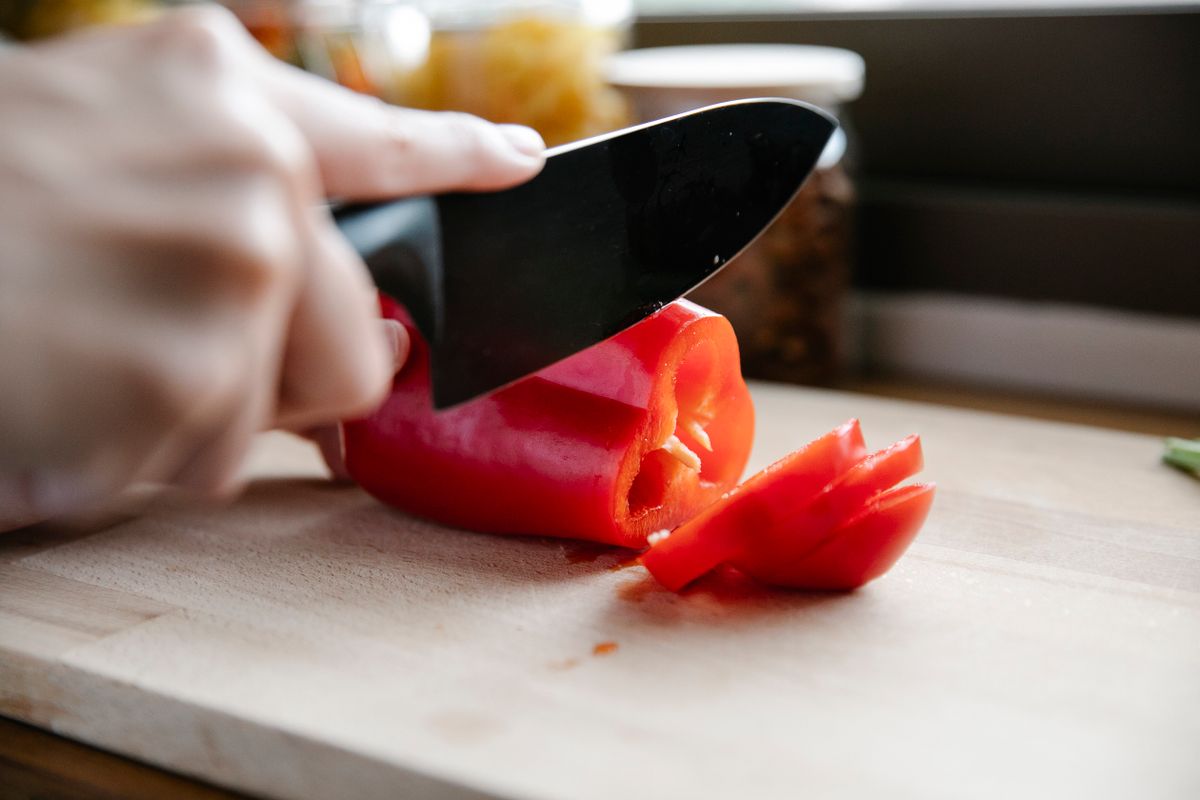
Photo by Sarah Chai on Pexels
Understanding where each safety mechanism succeeds—and where it falls short—is critical for establishing zero-accident kitchen protocols. Below is a detailed breakdown starting directly with key failure modes.
The Expert Verdict: Why You Need an Integrated Dual-Safety System
If you must choose a food prep system, never settle for a single safety feature. A mandoline hand guard protects you while sliding vegetables back and forth, but it cannot prevent a dicing blade from shifting under pressure. Conversely, a locked blade frame protects your hands during dicing, but offers no shield when slicing cucumbers on an open deck.
The ultimate solution is an integrated 15-in-1 multi-chopper set. Combining an ergonomic spiked safety food holder with a heavy-duty ABS mechanical latch lock system, this tool guarantees total coverage across setup, high-speed slicing, dicing, and cleaning.
- Primary Choice: Vegetable Chopper Set of 15 (Pack)
- Key Safety Hardware: ABS Safety Lock Frame, Spiked Hand Guard Holder, Food-Grade BPA-Free Housing, and Included Grid Cleaning Brush.
High-Risk Failure Modes: How Injuries Actually Happen
Most kitchen cuts involving multi-choppers do not stem from faulty equipment, but from operational shortcuts when handling sharp stainless steel inserts.
Safety Decision Tree: How to Safely Mandoline and Chop
- Which prep task are you performing? →
- Is the produce firmly secured on the spiked hand guard? →
- Cut a flat base on the vegetable first, then spike firmly into guard before slicing. →
- VERIFIED SAFE: Hold hand guard by wide top grip; keep palm flat while making smooth downward strokes. →
- Is the stainless steel dicing grid locked into the ABS frame latch with an audible click? →
- Clear all food particles from channel grooves, push frame down, and engage safety lock latch firmly. →
- VERIFIED SAFE: Place palm exclusively on top lid push pad and press down with vertical bodyweight. →
- Are you removing trapped food fibers from dense grid blades? →
- VERIFIED SAFE: Hold insert by non-sharp plastic outer border under running water. Use scraper tool or tooth brush—never bare fingers. →
Core Takeaways for Accident-Free Meal Prep
- Hand guards provide active user protection by insulating fingers during slicing, while blade locks supply static frame security to keep steel inserts stable under force.
- High-pressure dicing requires physical mechanical latches; pushing down on unlatched grids can force blades to dislodge unexpectedly.
- Prep safety starts with vegetable geometry—always slice a flat base onto round produce like onions or radishes before mounting them to hand guard prongs.
- Clean blades safely by using dedicated scraper tools and holding inserts exclusively by their food-grade ABS plastic frames.
- An integrated 15-in-1 multi-chopper set delivers dual-system protection, keeping every attachment locked during prep, cleaning, and drawer storage.
Which Safety Setup Fits Your Kitchen Style?
Hand guards shield fingers during fast slicing strokes across open blades, while blade locks prevent grid inserts from flexing or popping during high-pressure dicing and cleaning. Choosing a system with both mechanisms ensures zero safety gaps.
Best choice for
- Spiked Hand Guard with Wide Shield — Prevents fingertips from coming into contact with exposed angled stainless steel edges at the end of a rapid slice stroke.
- Mechanical Blade Latch System — Locks the heavy steel grid into the ABS housing, ensuring downward thrust cannot cause grid displacement.
- 15-in-1 Integrated Dual-Safety Chopper Set — Combines active ergonomic food guards, static frame locks, top-rack dishwasher-safe construction, and container storage into one unified safety system.
- You intend to slice short produce nubs by hand without attaching them to a spiked guard
- You bypass verifying mechanical lock clicks when switching between fine and coarse dicing grids
- You clean blade grid interiors with bare hands instead of specialized cleaning brushes
- Cut-Resistant Kitchen Gloves (Level 5) — Provides personal skin protection when hand-washing sharp inserts, though it lacks the physical food-pushing stability of a spiked hand guard.
- Fixed Single-Blade Mandolines — Simpler mechanical operation with fewer moving parts, but lacks dicing grids, egg separators, and integrated catch containers.
Top-Rated Dual-Safety Solution: 15-in-1 Multi-Chopper Set

Photo by Andrea Piacquadio on Pexels
Engineered for home cooks who prioritize safety, speed, and versatility, this complete kitchen system incorporates both physical hand shields and heavy-duty blade locking mechanisms.
Real Prep Scenarios: Hand Guards and Blade Locks in Action
Dicing 5 Pounds of Russet Potatoes for Hashbrowns — Rely heavily on the mechanical blade lock. When pressing dense potato blocks through a grid, high vertical force can cause unlatched inserts to torque. Ensure the lock latch is engaged securely into the ABS frame before pushing down on the top lid.
Slicing Paper-Thin Cucumbers and Radishes for Salads — Rely on the spiked hand guard. Cut the vegetable end to create a flat contact surface, push the stainless steel spikes deep into the vegetable, and slide smoothly over the mandoline blade. The wide plastic shield prevents hand contact at the end of each stroke.
Swapping from Dicing Grid to Julienne Slicer Mid-Prep — Disengage the frame lock latch completely before lifting out the initial grid. Grip the insert exclusively by its non-sharp plastic outer borders. Press the new insert into place until you hear the safety lock tab click shut.
See how active and static safety features work in real-world kitchen environments.
To appreciate why a single safety feature is insufficient for kitchen prep, one must examine the mechanical physics of kitchen cutting tools. Injury prevention in food preparation equipment relies on two distinct design philosophies: active user ergonomics and passive mechanical restraint.
The Mechanics of Active Hand Guards
An active hand guard operates as an extension of the user's hand. When slicing vegetables over an angled mandoline blade, friction between the produce and the steel surface creates forward momentum. As the vegetable diminishes in size, your hand naturally moves closer to the cutting edge.A premium food holder counters this risk using two engineered elements:
The Engineering of Passive Blade Locks
While hand guards protect against motion risks, mechanical blade locks address pressure risks. During vertical dicing, a user exerts significant downward force to push high-density produce through matrix-patterned grid blades.Without a positive locking mechanism, this hydraulic-like downward pressure generates lateral shear stress. If an insert is held only by friction, this force can cause the frame to twist or pop out upward toward the operator. Heavy-duty multi-choppers solve this with mechanical snap-latches and recessed channel grooves:
- Recessed ABS Retaining Channels: The plastic frame of the blade insert slides into reinforced track grooves that absorb vertical impact.
- Positive Locking Latches: Mechanical toggle latches or spring-loaded tabs snap over the insert frame, locking it flush into the housing. This prevents flex, preserves blade alignment, and stops upward displacement even under maximal press pressure.
Material Integrity: ABS Plastic and Stainless Steel
Safety features depend entirely on structural integrity. Standard cheap plastics flex under pressure, leading to loose locking tabs and guard slippage. High-grade multi-choppers utilize thick, BPA-free ABS polymer for structural components. ABS exhibits high impact strength and dimensional stability, ensuring that locking tabs retain their tension over thousands of uses and dishwasher cycles. Paired with 304-grade rustless stainless steel blades, this construction ensures that cutting edges remain sharp and locked firmly in place year after year.Frequently Asked Questions About Chopper Safety Features
Find clear answers to common safety, operational, and maintenance questions.
How to Put Your Safety Knowledge Into Action
Your decision: Prioritize a vegetable chopper system that combines an active spiked hand guard for slicing with a mechanical ABS blade lock for high-pressure dicing.
Do this next: Inspect your current kitchen prep tools for worn latches, loose blade grids, or missing hand guards, and upgrade to a dual-safety 15-in-1 multi-chopper set.
Related resource: Explore proper hand-washing and dishwasher safety guidelines for multi-blade kitchen tools.
Upgrade your kitchen setup with the Vegetable Chopper Set of 15 at https://mandolinechopper.com to get complete dual-safety protection.
Take these immediate steps to ensure safe, efficient, and enjoyable meal prep in your kitchen.
More Kitchen Safety & Maintenance Guides
Cross-link to relevant internal guides.
Cover photo by cottonbro studio on Pexels.