
Mandoline Slicer vs Vegetable Chopper with Container: Stability & Slip Comparison
Should you buy an open mandoline slicer or a vegetable chopper with a container?
Locked catch container choppers prevent slipping far better than open mandoline slicers. Container choppers convert downward pressing force directly into vertical friction against the countertop, securing their non-slip feet. In contrast, open mandolines rely on lateral sliding forces that frequently cause the unit to skid sideways across slick quartz or polished granite surfaces.
Countertop Stability Matrix by Kitchen Surface
| Kitchen Surface Scenario | Open Mandoline Slicer Performance | Locked Container Chopper Performance | Primary Slip Risk / Failure Mode |
| --- | --- | --- | --- |
| Polished Granite / Quartz + Micro-Moisture | High Slip Risk: Lateral shearing force easily breaks static friction of small rubber pads, causing forward skidding. | Maximum Stability: Downward press force seals wide rubber base pads directly into the counter surface. | Hydroplaning from water droplets or food starches under open feet. |
| High-Volume Potato & Carrot Dicing | Extreme Resistance: Hard root veggies require intense forward pushing, risking sudden tool kickback. | Effortless Anchor: Heavy vertical pressure drives the dicing grid smoothly while keeping the base stationary. | Blade jamming causing sudden tool displacement across the counter. |
| Laminate / Formica Countertop Prep | Moderate Drag: Smooth surface offers minimal mechanical grip for angled kickstands. | High Friction Grip: Large surface area container rubber feet hold firm under rapid dicing. | Angled kickstand leg buckling or sliding backward during push stroke. |
| Wooden Butcher Block / Grain Surface | Good Traction: Natural wood grain offers decent friction, though lateral movement remains possible. | Optimal Performance: Rubber pads grip porous grain tightly; catch container collects all stray juices. | Juices leaking beneath the frame, reducing pad friction mid-prep. |
Evaluating how tool mechanics perform across different common countertop materials reveals stark safety and friction differences during heavy meal prep.
Stability and Slip Risks: Container Choppers vs. Open Mandolines
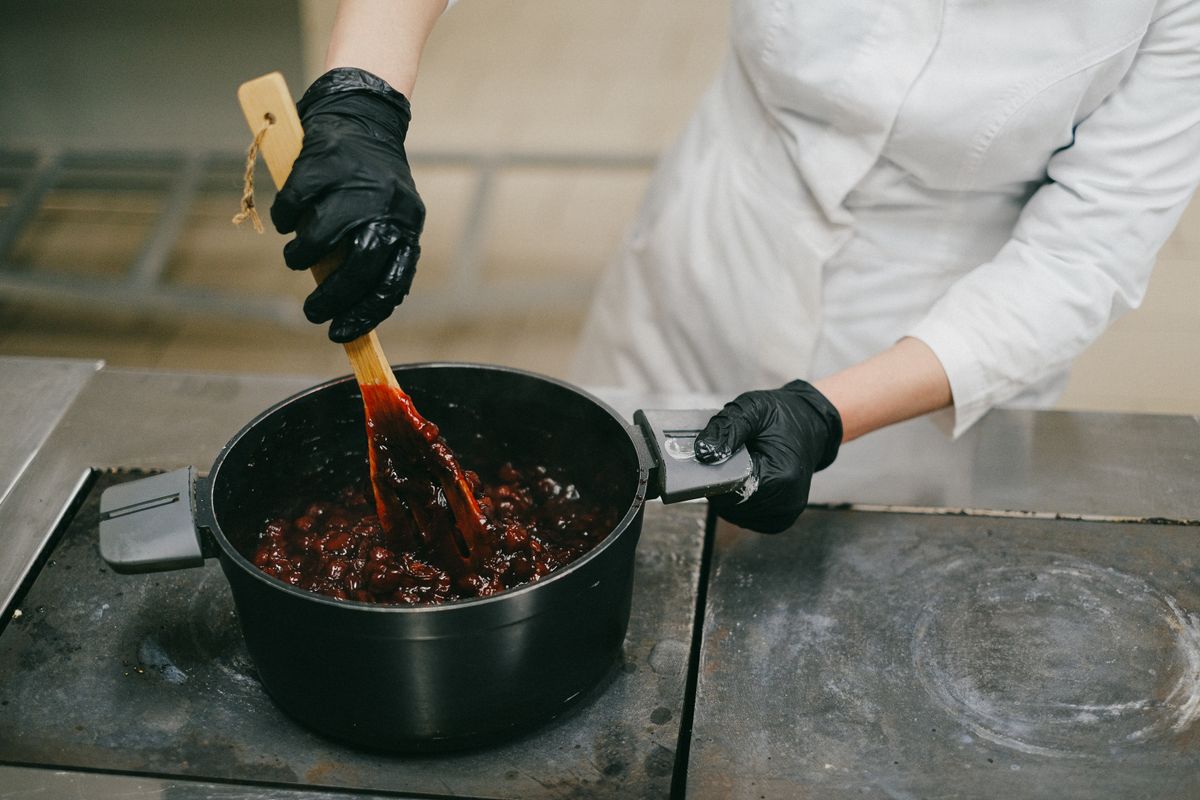
Photo by Anna Shvets on Pexels
Examining tool mechanics through their primary failure modes highlights why container-based systems protect fingers and countertops more effectively.
Pro Tip: Maximizing Rubber Foot Friction and Preventing Hydroplaning
> Expert Tip: Never place any cutting tool on a damp counter. Micro-moisture acts as a lubricant between smooth rubber pads and polished quartz or granite, dropping static friction by up to 70%. Always wipe your countertop bone-dry before prepping. If using an open mandoline on a slick surface, place a slightly damp paper towel under the rear feet to create a temporary mechanical suction lock. For zero-slip security, opt for a container chopper whose weight increases as it fills, naturally strengthening its countertop grip.
The Verdict: Best Choice for Safe, Slip-Free Meal Prep
For home cooks seeking complete countertop stability, safety, and rapid meal prep, the Vegetable Chopper Set of 15 (Pack) is our top recommendation.
- 15-in-1 Versatility: Includes dicing grids, mandoline slicer plates, cabbage shredders, garlic grinder, egg separator, and peeler.
- Non-Slip Catch Container: Heavy-duty ABS base with thick rubber footings that convert downward pressure into rock-solid countertop grip.
- Safety Lock System: Keeps top slicing plates firmly locked in place so blades never shift mid-cut.
- Rustless Stainless Steel: Razor-sharp blades chop through dense carrots, onions, and potatoes without bowing or sliding.
- Easy Cleanup: Includes specialized cleaning brushes and top-rack dishwasher-safe, BPA-free components.
Decision Flowchart: Which Stability Setup Fits Your Kitchen?
- Is your primary goal slicing long veggies or fast, uniform dicing? → Yes: Go to Question 2 (Dicing Focus). No: Go to Question 3 (Slicing Focus)
- Do you prep on slick polished granite, quartz, or laminate counters? → Yes: Choose a Locked Catch Container Chopper. Downward force anchors rubber feet on smooth surfaces.. No: A locked container chopper is still recommended, but a heavy wooden board with a mandoline is workable.
- Are you comfortable handling exposed razor blades during lateral push strokes? → Yes: An open mandoline works if paired with cut-resistant gloves and a non-slip counter mat.. No: Choose a 15-in-1 Container Chopper with interchangeable mandoline plates and safety hand guard.
Key Takeaways: Mechanical Stability Breakdown
- Force Direction Matters: Dicing in a container chopper uses vertical downward force that presses non-slip rubber feet harder into the counter. Open mandolines rely on horizontal pushing forces that push the tool away from you.
- Hydroplaning Risks: Oil, water, or vegetable starch on slick countertops creates a slick film that causes unanchored mandolines to skid.
- Integrated Catch Trays Add Ballast: As chopped vegetables accumulate in a container base, the added weight increases stability and friction.
- Safety Locks Prevent Plate Separation: Premium choppers feature mechanical locks holding blade plates flush, eliminating dangerous flexing or unexpected slipping.
- Hand Guards are Mandatory: Regardless of tool design, always engage safety hand guards or wear cut-resistant gloves to protect fingers during final pass-throughs.
Tool Selection Guide by Prep Task
Locked catch container choppers provide vastly superior countertop stability over open mandolines because dicing uses vertical downward force, pressing non-slip rubber feet into the counter rather than pushing the tool sideways.
Best choice for
- 15-in-1 Container Chopper System — Vertical push-lid pressure locks the non-slip base in place while grid blades produce perfectly uniform dice in one smooth motion.
- Open Mandoline Slicer — Allows quick continuous full-length passes, though requires a wet towel beneath feet to prevent lateral skidding.
- You prep on slick surfaces covered in micro-moisture without wiping them dry first.
- You force oversized, untrimmed root vegetables through small blade grids without cutting a flat base.
- 15-in-1 Combo Chopper & Mandoline System — Offers interchangeable mandoline slicer top plates mounted directly over the locked container base, giving you slicing capability with container stability.
Featured Solution: 15-in-1 Multifunctional Chopper with Catch Container
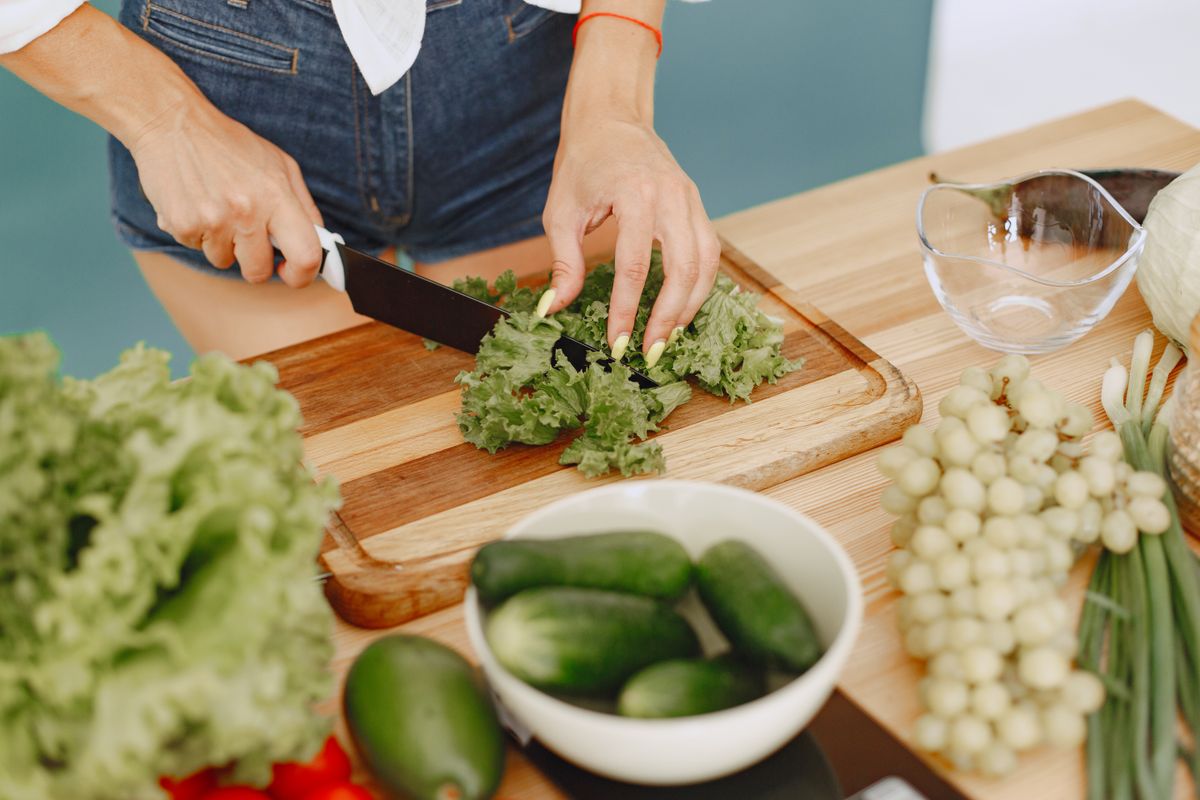
Photo by Gustavo Fring on Pexels
Designed for maximum kitchen safety, rock-solid countertop stability, and rapid meal prep efficiency.
Real-World Prep Scenarios: Wet Counters, Heavy Root Veggies & Speed Dicing
Prepping Salsa on a Polished Quartz Countertop with Wet Hands — Failure Mode Warning: Open mandolines frequently skid forward when moisture reaches the rear feet. Solution: Use a 15-in-1 locked container chopper. Wipe the quartz counter dry, lock the dicing plate in place, and press vertically. The downward force drives the rubber feet tight against the quartz.
Batch-Dicing Raw Sweet Potatoes for Autumn Roasts — Failure Mode Warning: Dense root crops demand high force. On open mandolines, this leads to blade jamming and violent tool tilt. Solution: Slice sweet potatoes into 1/2-inch slabs first to establish a flat plane, then press straight down into the container dicing grid.
Shredding Cabbage for Large-Batch Coleslaw — Failure Mode Warning: Large cabbage wedges push lightweight slicers across the counter. Solution: Mount the mandoline shredder insert directly onto the catch container lid, engage the safety lock, and hold the container side handle with your non-dominant hand while operating the guard.
Real kitchen environments present hazards that test cutting tool stability. Here is how key prep scenarios play out.
To understand why kitchen tools slip, you have to look at vector physics and friction dynamics on modern countertops. Polished stone surfaces like quartz, marble, and granite possess very low surface roughness. While this makes them hygienic and beautiful, it provides little mechanical keying for smooth rubber or plastic feet.
The Lateral Vector Hazard of Open Mandolines
When you pass an onion or potato across an open mandoline, you apply force diagonally down and forward. The horizontal component of that force pushes against the tool's structural frame. If the horizontal push force exceeds the coefficient of static friction between the rubber feet and the countertop, the mandoline slides forward instantly. If your hand guard slips or your grip relaxes during that unexpected movement, fingers can collide directly with the exposed stainless steel edge.Why Container Base Choppers Stabilize Themselves
In contrast, a vegetable chopper with a catch container operates on a vertical hinge or vertical press mechanism. When you push down on the chopping lid to drive produce through a stainless steel dicing grid, 100% of your manual force acts vertically downwards ($F_z$).According to Coulomb's Law of Dry Friction, maximum friction force ($F_f$) is directly proportional to normal force ($N$): $$F_f = \mu N$$
By pressing straight down on a container chopper, you multiply the normal force against the countertop, drastically increasing the friction force resisting sideways sliding. Furthermore, as chopped vegetables drop into the large catch tray, the added ballast lowers the center of gravity and increases the static weight of the base.
The Role of Premium ABS and Mechanical Safety Locks
Structural rigidity is equally critical. Cheap, thin plastic flexes under pressure, causing blade grids to misalign or pop out of their housing. Premium 15-in-1 chopper sets utilize thick, food-grade ABS plastic that resists torsional twisting. Integrated safety locks anchor the upper blade frame into the lower tray, ensuring that high pressure translates cleanly into sharp cuts rather than frame deflection.Explore Related Kitchen Safety Guides
Expand your knowledge on safe slicing techniques, blade maintenance, and countertop safety:
- Safe Prep Slicers: How to Choose a Vegetable Chopper with Non-Slip Countertop Stability
- How to Properly Engage Your Veggie Chopper Safety Lock (and Fix Blade Slippage)
- Vegetable Chopper Countertop Safety FAQ: Locks, Base Grip, and Catch Trays Explored
- Mandoline Hand Guard vs. Cut-Resistant Gloves: Which Protects Fingers Better?
Frequently Asked Questions About Tool Stability and Safety
Answers to critical questions regarding countertop friction, maintenance, and blade safety.
Next Steps for Safe Kitchen Setup
Your decision: Choose a locked catch container chopper system if countertop stability, slip prevention, and multi-blade safety are your top priorities.
Do this next: Select a 15-in-1 combo set featuring non-slip rubber footings, safety lid locks, and a large catch tray container.
- Read next: Safe Prep Slicers: How to Choose a Vegetable Chopper with Non-Slip Countertop Stability
- Read next: How to Properly Engage Your Veggie Chopper Safety Lock (and Fix Blade Slippage)
Vegetable Chopper Set of 15 (Pack) - Includes 15-in-1 multifunctional attachments, non-slip container base, and safety lock.
Take these actions to optimize your prep area for slip-free slicing and dicing.
Cover photo by Sarah Chai on Pexels.