Troubleshooting Your Julienne Blade: How to Cut Flawless Vegetable Matchsticks Without Jamming
Is your mandoline julienne blade constantly jamming or tearing vegetables? To fix julienne blade jams immediately, trim a flat 90-degree leading edge on your vegetable, seat the safety hand guard firmly in the center, and execute a swift, continuous downward stroke without hesitating mid-pass.
Diagnostic Flowchart: Why Is Your Julienne Blade Jamming?
- Does the vegetable stop on initial contact with vertical teeth? → Yes: Trim a flat 90-degree leading edge on the produce; do not push curved tips into teeth.. No: Check mid-stroke momentum..
- Does it lock up halfway through the downward stroke? → Yes: Maintain a continuous, swift downward motion; hesitation causes blade wedging.. No: Check produce density and moisture..
- Are the matchstick ends shredded or crushed at the bottom? → Yes: Engage the safety hand guard prongs centered in produce to prevent tilting.. No: Blade and runway are clear; continue slicing..
Julienne Failure Modes & Root Cause Fixes
Photo by cottonbro studio on Pexels
| Failure Mode | Root Cause | Immediate Field Fix | Prevention Technique |
| --- | --- | --- | --- |
| Mid-Stroke Lockup | Hesitating or slowing down midway through pass while engaged in vertical teeth | Back produce out upward, trim top surface, repeat with single fast stroke | Maintain continuous downward momentum without pausing |
| Torn or Ragged Matchsticks | Produce entered blade at an angle or without hand guard alignment | Square off vegetable end and center prongs of safety hand guard | Pre-cut flat 90-degree anchor face before touching runway |
| Crushed Vegetable Flesh | Excessive downward force on soft produce like zucchini or cucumbers | Lighten downward hand guard pressure and clear blade teeth | Let razor-sharp stainless steel blades slice using velocity, not crushing force |
| Wedge Jamming on Root Edge | Pushing uncut, rounded carrot tip directly into vertical teeth | Slice off rounded tip to create flat lead edge | Always create flat lead plane on hard root vegetables |
Identify your exact slicing failure mode below to instantly implement the corresponding field fix and prevention technique.
Pre-Cut Checklist for Jam-Free Matchsticks
- Is the julienne blade frame locked securely into the main deck slots?
- Have you sliced a flat 90-degree leading edge onto the produce?
- Are the food guard steel prongs pressed firmly into the vegetable center?
- Is the slicing runway clear of leftover vegetable bits or moisture buildup?
- Are you committed to a single, swift, unbroken downward motion?
Pro Tip: Moisture Management and Speed Physics
Julienne cutting relies on two simultaneous cutting actions: vertical teeth score the vegetable while the horizontal main blade shear-cuts the bottom of the strip. If your stroke speed drops below approximately 1.5 feet per second, friction against the side walls of the vertical teeth increases exponentially, causing immediate lockup.
For high-starch roots like potatoes or high-moisture vegetables like zucchini, surface wetness creates suction against the flat runway. Always pat pre-trimmed vegetables dry with a paper towel before slicing. Removing surface moisture reduces drag by up to 40%, allowing the continuous kinetic force of your stroke to carry the vegetable clean through both set of blades.
Looking for a heavy-duty kitchen workhorse that makes meal prep fast, safe, and clean? Upgrade your kitchen prep with the All-In-One 15-in-1 Veggie Chopper & Mandoline—featuring precision rustproof stainless steel blades, a heavy-duty catch container, and built-in safety locking systems.
Produce Prep Decision Tree: Trimming Angles by Vegetable Type
- Are you slicing dense root vegetables (carrots, daikon, beets)? → Yes: Slice a 1/2-inch flat lead edge; align plant fibers parallel to blade length.. No: Check for high-water content produce.
- Are you slicing high-moisture produce (zucchini, yellow squash, cucumber)? → Yes: Keep skin intact for structural rigidity, slice flat lead face, apply light downward guard pressure.. No: Check starchy tubers.
- Are you slicing starchy tubers (russet potatoes, sweet potatoes)? → Yes: Rinse excess surface starch in cold water, dry thoroughly with a towel before sliding down deck.. No: Standard flat-trim prep applies.
Recommended Tool: All-In-One 15-in-1 Veggie Chopper & Mandoline
Eliminate blade flex jams and dangerous slipping with a heavy-duty food prep station designed for maximum stability.
Core Takeaways for Flawless Vegetable Matchsticks
- Trim flat leading edges on all produce to prevent initial tooth wedging.
- Maintain swift, unbroken downward stroke speed to let kinetic energy glide through fibers.
- Always lock the blade insert flush into the food-grade ABS deck to eliminate flex.
- Dry excess moisture and starch from potatoes or cucumbers to prevent suction drag.
Step-by-Step Technique for Jam-Free Julienne Cuts
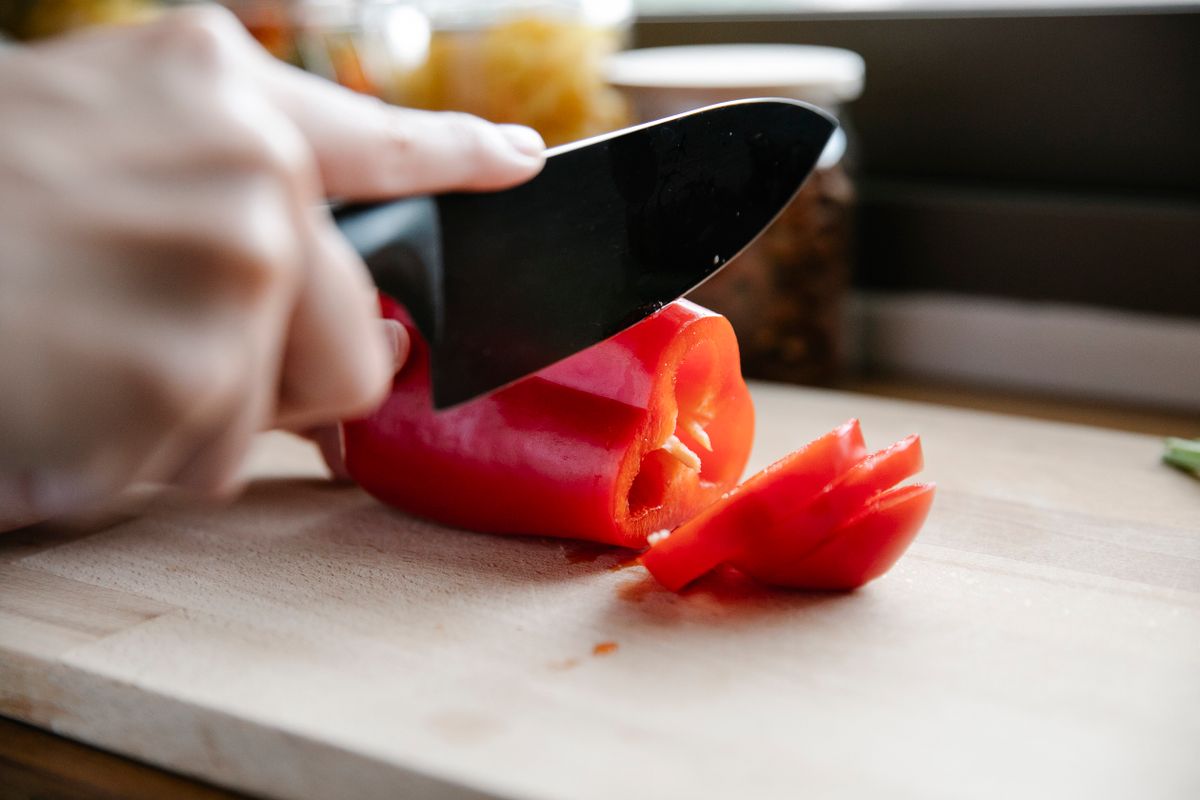
Photo by Sarah Chai on Pexels
Mastering the mechanics of mandoline slicing requires proper body alignment, firm produce anchoring, and confident stroke momentum.
4 Critical Mistakes That Cause Mandoline Jams and Torn Veggies
Avoid these frequent mechanical and operational errors to preserve blade sharpness and ensure uniform matchsticks every time.
Frequently Asked Questions
Answers to common maintenance, safety, and operational questions regarding julienne attachments.
Next Steps for Master Slicing Safety and Maintenance
Your decision: Determine whether your julienne issue stems from produce shape prep or hesitation during the downward stroke.
Do this next: Trim a 1/2-inch flat plane on your vegetable, seat the hand guard firmly, and execute a swift continuous downward pass.
- Read next: How to Use a Mandoline Hand Guard Properly: Step-by-Step Finger Protection
Vegetable Chopper Set of 15 (Pack)
Continue refining your prep skills by mastering hand guard ergonomics and proper blade storage routines.